 Author: Sefiye al-Turkiyyah
 Date published: 2026-02-09
 Updated: 2026-02-09

Islam about going no contact with narcissistic parents
It is clear that Islam places great importance on the family structure, and that the general rule is that parents are to be honored and obeyed. But does this also apply in the case of narcissistic parents?
Choosing to go no contact with one’s parents is a major decision that brings about a significant and life-changing shift.
Parents who're narcissists often harm their children in one way or another because of how they view the world. Everything must revolve around them, which means the rights and needs of their children are often neglected.
When we examine this issue more closely, we find that narcissistic parents are, more often than not, abusive toward their children.
- They scold their children
- They give the silent treatment over minor issues
- They misuse their authority to induce toxic shame
- They exploit their children financially
- They share their child’s deepest secrets
- They gossip about their children
- They gaslight their children
It is unfair to expect someone to endure abuse in silence.
Every person has the right to defend themselves. Yet when it comes to victims of narcissistic abuse, people often remain silent about them, which is unjust.
Allah is never unjust to any of His creation, and this means that a child of narcissistic parents also has the right to defend themselves.
So what does self-defense look like in this context within Islam? Is it permissible to permanently distance oneself from narcissistic parents? Does birr al-walidayn still apply to narcissistic parents?
Do victims still owe their narcissistic parents?
Simply put, victims of persistent narcissistic abuse do not owe their parents. It would be unjust if they did.
Many Muslims with narcissistic parents choose to go low contact because they feel ashamed of permanently cutting ties. This may be due to social pressure, the difficulty of accepting life without a parent, or fear of fully committing to such a decision.
They may feel that their parents must still be financially supported, or that they should at least stay in touch through occasional messages.
A small minority choose to go no contact, change their phone number, and never reach out again.
But here is the issue: if victims of narcissistic parents are expected to remain dutiful regardless of abuse, where is the justice in that? In many cases, it becomes nothing more than enabling harmful behavior.
Yes, as a general rule, parents are to be honored and respected. However, this principle does not apply in every circumstance.
Muslims are encouraged to honor and respect one another, yet we know that this does not apply unconditionally in every situation. Consider the following examples:
- "I know that brother robbed your home, stole your car, and emptied your bank account, but when you see him, smile at him because he is your brother."
- "I know that brother betrayed you by committing adultery with your wife, but he is your brother, so honor him."
- "I know that sister spoke about you behind your back, said terrible things about you, and damaged your reputation, but greet her because she is your sister."
- "I know that sister physically attacked you without justification, and you ended up needing stitches at the hospital, but move on and greet her because she is your sister."
If such statements are clearly unfair, then what changes when the perpetrator is a narcissistic parent? Should the same principles of justice not apply?
- "I know your father robbed your home, stole your car, and emptied your bank account, but when you see him, smile at him because he is your parent."
- "I know your father betrayed you by committing adultery with your wife, but he is your parent, so honor him."
- "I know your mother gossiped about you behind your back, said terrible things about you, and severely damaged your reputation, but greet her because she is your mother."
- "I know your mother unjustly attacked you physically, and you needed stitches at the hospital afterward, but get over it and greet her because she is your mother."
It becomes clear how unreasonable it is to tell a victim of narcissistic abuse to simply forgive and overlook everything, as this is both unnatural and unfair to the victim.
Narcissistic parents, like anyone else, must face consequences for abusive behavior. One such consequence may be losing access to the person they have harmed.
Many people overlook this principle and instead call for unconditional honoring of narcissistic parents. In doing so, they indirectly communicate to victims that their pain does not matter and that justice does not apply to their situation.
Just as a father who sexually abuses his daughter forfeits any right to access to her, the same principle applies to a narcissistic parent who drives a child toward suicidal thoughts through persistent gaslighting, bullying, and emotional neglect. Justice applies in every context and environment, and family relationships are not exempt from it.
It cannot be right that a person who has endured severe and prolonged abuse still owes loyalty or access to the one who harmed them, regardless of who that person is.
Unfairness of blind honoring of parents
Islam does not call for blind honoring of parents, because such a system would be unjust. What honor belongs to someone who commits severe wrongdoing or oppression?
It is evident that in certain cases, parents forfeit the right to be honored because of the severity of the harm they have caused.
A person who has experienced persistent narcissistic abuse does not owe their parents anything. This aligns with justice, because to claim otherwise would imply injustice, and Islam does not permit injustice.
Victims who choose to go no contact with narcissistic parents are often shamed by others, and this is wrong. They should not be shamed for protecting themselves, preserving their dignity and self-respect, and refusing abuse.
There is nothing inherently wrong with cutting off contact with narcissistic parents if their behavior has caused severe psychological harm or led to suicidal thoughts. Boundaries exist within family systems as well, and parents are not exempt from them.
The belief that one must remain dutiful and respectful toward parents regardless of circumstances is not consistent with justice. Such a view would require injustice toward the victim — and Allah is never unjust.
Going no contact can be a valid option
It is permissible to cut ties with a parent who has caused severe physical, emotional, or psychological harm. If this option did not exist, it would imply that harmful behavior carries no consequences and that victims have no right to protect their dignity and self-respect.
No child desires to go no contact, but in some cases, it becomes the only remaining option to preserve one’s dignity and sense of self.
Islam does not always conflict with no contact
In certain severe situations, Islam allows a person to go no contact as a matter of justice and fairness. This is because when serious boundaries are violated, the perpetrator may forfeit their rights over the victim.
We recognize this principle in other situations as well. Consider:
- A daughter who was sexually abused by her father
- A child who was abandoned as a baby and left without care
- A person who was tortured or treated like a prisoner by their parents
If we ask why birr al-walidayn would not apply in such situations, the answer ultimately comes down to justice for the victim.
It would be unjust to tell a victim of sexual abuse, severe abandonment, or physical torture that they still owe their parent loyalty or access, as this would dismiss their well-being.
This demonstrates that there are circumstances in which a person no longer owes their parents the same obligations.
Narcissistic parents traumatize their children through:
- Years of demeaning behavior, minimizing achievements, mocking appearance, or discouraging their child’s ambitions.
- Long-term emotional neglect, ignoring the child’s needs and failing to show care or validation.
- Abandonment, such as leaving for another country and starting a new life without the child.
- Repeated harsh physical punishment that creates lasting fear.
Some people believe that victims in such circumstances must still remain connected to their narcissistic parents and continue to owe them. However, this overlooks the depth of harm involved, as prolonged abuse can push a person toward suicidal thoughts.
When a person reaches such a state, it often reflects the severity of the abuse they have endured.
It is widely understood that victims of sexual abuse, abandonment, or prolonged physical torture may develop suicidal thoughts due to the deep internal damage caused by such experiences.
Psychological abuse is often minimized because it is less visible, yet harm of this nature is not insignificant. Every form of harm matters, and psychological abuse can at times be as damaging as, or even more damaging than, other forms of abuse.
It is well known that long-term bullying and emotional harm can lead to suicidal thoughts due to their traumatic effects. Psychological abuse, therefore, must be recognized as a serious and valid form of harm.
Navigating no contact with narcissistic parents
Going no contact with one’s parents is incredibly difficult, because it forces the realization that certain needs will be unmet—needs that parents are supposed to fulfill, such as encouragement, a sense of fundamental connection, and support during hardships.
Additionally, parents are meant to provide love. Accepting that this love cannot be attained leaves a void—a lack of love that can eventually be fulfilled, but only through a longer, more challenging path.
Grief
This phase is often the longest and demands significant time and effort. Victims will experience moments of collapse and rebuilding repeatedly.
The up-and-down cycle of healing from narcissistic parents is natural and should not be resisted.
Narcissistic parents leave behind substantial damage, but with Allah’s help, recovery is possible.
One grieves the reality that their family lacked good intentions, the false belief that everyone inherently has good in them, and the betrayal of trust by those closest.
This phase encompasses healthy expressions of anger and resentment, as well as sadness, fatigue, and anguish.
Grieving the inability to fulfill the need for biological connection
Humans have an inherent need for biological connection, which cannot be fulfilled due to the abuse they experienced.
Letting go of this need is challenging—not because the parents were capable of fulfilling it, but because they were not. If they had been capable, no contact would never have become necessary, as such parents do not push their children toward no contact.
Navigating no contact with narcissistic parents involves accepting that this fundamental need will remain unmet. It requires significant self-acceptance and the understanding that some needs may not be fulfilled by the biological family.
However, this biological need diminishes over time, especially when support is available from sources beyond the family.
Defending against enablers
Victims of narcissistic abuse inevitably encounter people who defend the abusive parents. Often, these are siblings, uncles, aunts, or cousins.
Enablers seek the path of least resistance, which usually involves defending the narcissistic parent. They are unwilling to endure the personal loss that would come from supporting the victim.
Common statements from enablers include: "They didn’t mean it," "You’re exaggerating," or "Parents are to be honored in Islam."
Such responses invalidate the victim’s lived experience, pain, and trauma. While one may initially feel compelled to explain themselves, it quickly becomes clear that enablers were never going to defend the victim.
The victim learns to self-validate, remember that going no contact was necessary, and recognize it as an act of self-preservation and self-respect.
Defensive wall of no contact
When a victim chooses to maintain no contact, they may change their phone number, move away, and start a new life.
It’s as if a new chapter begins—leaving the past behind and not allowing it to control the future.
Harmful people who have betrayed them are removed from their lives, leaving no openings for further manipulation or abuse.
This process may occur while still in the grieving phase. Narcissistic abuse and betrayal trauma often reveal the true nature of a person’s biological family.
In many ways, people with narcissistic parents share experiences with orphans—they both may realize that they have no reliable family to depend on, though those with narcissistic parents discover this fact later in life, after repeated betrayal.
The next chapter
For many victims, beginning the next chapter can feel like an overwhelming step early in the healing process. But once fully ready, they approach it with determination.
This readiness comes from fully validating oneself and removing any lingering false shame that had held them back.
Starting this new chapter may involve pursuing dream jobs, building a family, spending quality time with oneself, and becoming the person one has always wanted to be.
Past experiences no longer hold sway over the future. Life begins to flow again, until the next challenge arises—though its impact is unlikely to match the intensity of what was endured with narcissistic parents and family dynamics.
Sometimes, the greatest challenge is not saved for last—it may appear as the very first test.
A fictional story between grandfather and grandson
As the grandfather sits in his old wooden chair, reading his favorite newsletter in a quiet room where only the ticking of the clock can be heard, something suddenly changes.
His grandson bursts into the room, out of breath, looking at his grandfather with teary eyes, struggling to gather his thoughts before speaking.
The tension in the room becomes palpable, as if the ground itself has begun to tremble and the clock has suddenly stopped ticking.
Grandson: "Oh grandfather, I am being severely mistreated by my parents. They take advantage of my kindness, bully me, put me down cruelly, break my trust repeatedly, and tell me that I do not deserve to live and that I should never have been born.
It has deeply affected my mental state, shattered me internally, and made me feel suicidal, because I cannot see a way out. My parents tell me that I am commanded to honor them no matter what.
My days feel like years, and I see no hope for change. I have been waiting and waiting, trying to increase my ibadah for the sake of Allah, hoping that He would relieve me from this pain. But my parents continue to hurt me day after day. Please help me."
How would a compassionate grandfather respond?
The grandfather looks visibly shaken, deeply hurt by seeing his grandson in such a state. He is close to his grandson and sincerely wants him to succeed in life and find happiness.
While the grandfather understands the high status of parents in Islam, he also realizes that this principle cannot be applied blindly in this situation. Telling his grandson that he must continue honoring his parents would invalidate his experience, suggest that his pain does not matter, and imply that there are no consequences for harmful behavior simply because someone is a parent. Deep in his heart, he knows that cannot be right.
He takes a breath before responding, his thoughts pulling in different directions as he carefully searches for the right words. After a moment of silence, he speaks:
"Oh my grandson, I love you and I care for you, and I can see that you are deeply hurt. I know you would not come to me in this state without a real reason. It pains me to hear what you are going through, and I will not tell you to remain in an environment that continues to harm you, because that would be unjust toward you. You deserve peace and safety, and what you are experiencing is deeply painful. The words spoken to you are harmful, and such words can wound the soul of the one who hears them. You depended on your parents, yet they mistreated you. You looked up to them, yet they failed you. They told you they must be honored, but they misused that idea against you.
Oh my grandson, you have the right to protect yourself, even when the harm comes from your parents. Allah did not leave you helpless in the face of injustice, for He is fair in all matters. Do not let anyone convince you otherwise, because Allah is never unjust to His creation. Allah would not command you to remain in ongoing harm, because you deserve peace. Nor would He command you to keep those in your life who continue to destroy your well-being, because you deserve justice. It would not be just for you to be commanded to honor those who have broken your heart."
And we can almost hear victims of narcissistic abuse say, "If only we had a grandfather who validated our pain and stood up for us."
Indeed, having such a grandfather would have been amazing, and it could have greatly supported the healing journey.
Often, when a victim chooses to go no contact, the family may turn against them. This is when people’s true colors are revealed. Not every sibling, uncle, or aunt will care in the way you had hoped, and that can be a hard truth to accept.
Keep in mind that sometimes, lacking something ourselves can inspire us to give it to others. Through this, communities and bonds can be created that might never have existed otherwise.
Fitrah Tawheed on TikTok
Join the Reddit community
🌙 Welcome to a safe space for Muslims with narcissistic parents
byu/FitrahTawheed inMuslimsRaisedByNarcs
Counseling for narcissistic abuse
Through live chatThe counseling sessions are taken through live chat.
A session costs $40 and is 50 minutes long, which provides you more than enough time to receive adequate guidance, support, or advice.




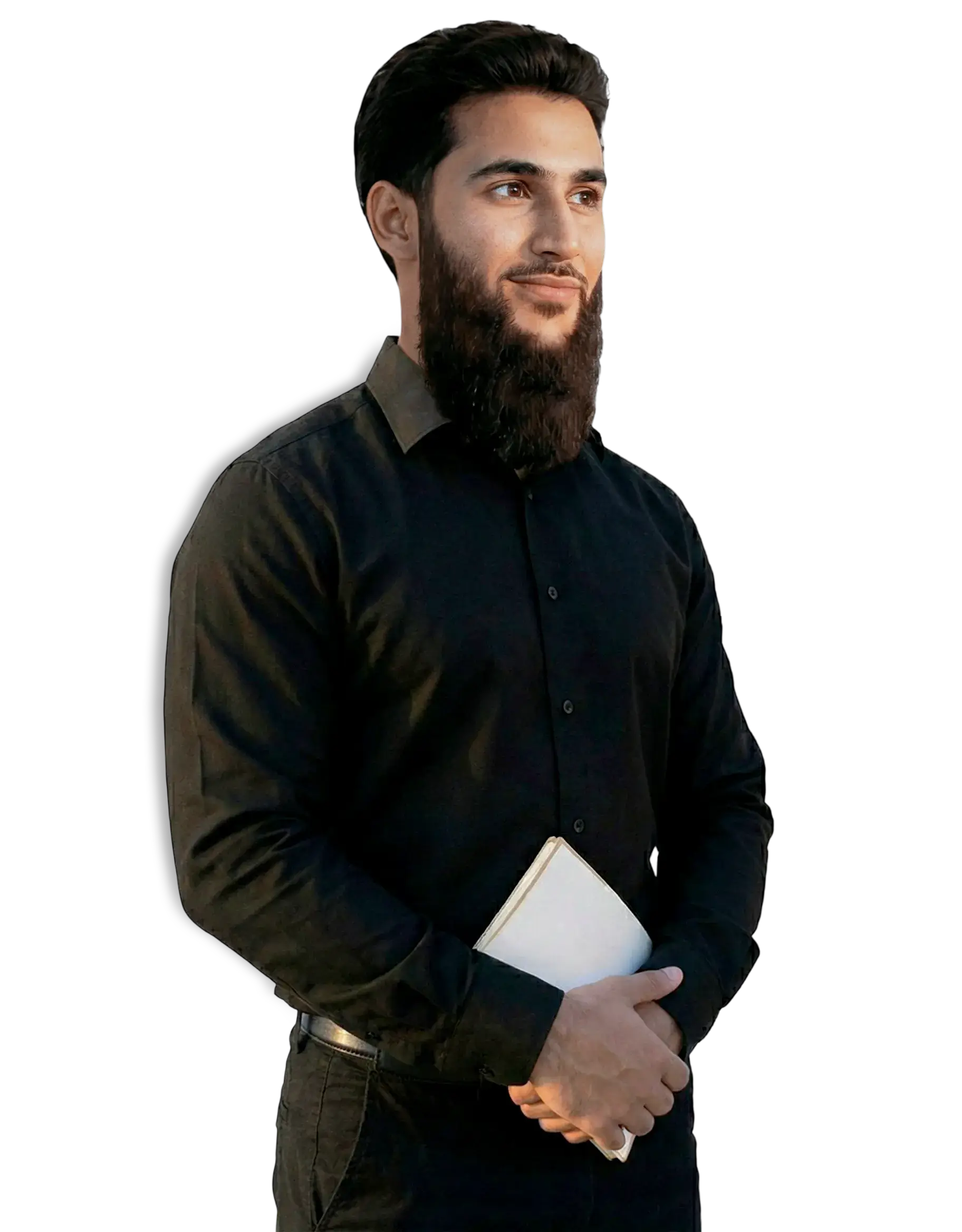
Rami al-Maghribi
Certified Islamic CounselorYears of Experience:
5
Clients:
250+
Rami al-Maghribi — A compassionate and approachable Islamic counselor, Rami provides guidance with clarity and sincerity. He helps individuals navigate personal challenges, faith-related questions, and emotional well-being with empathy, honesty, and practical advice.